Carrie Heitman
"I can not recommend ICS highly enough. Hook & Eye Theater had a wonderful experience working with Shelby and the team at ICS from beginning to end. What an incredible organization serving the theatrical community and beyond."
Areas We Serve · Tucson
Which languages are in the room is the question that comes first here.


Language pairs before service names
Tucson sits about an hour north of the border, and Spanish here is a working language rather than a translation of one. Visitors cross from Sonora for a weekend; families switch between languages inside a single sentence; a public meeting takes comment in whichever language the person at the microphone grew up speaking. The region's oldest languages belong to the nations whose land the city was built beside, and they are spoken here too. So a request that reads 'we need an ASL interpreter' has usually left out the part that will decide the staffing.
It decides it because interpreters work from what reaches them. A sign language interpreter listening to a presenter who has switched to Spanish is stuck unless they hold that language themselves — trilingual work is a specialism of its own, not a bonus that comes with certification — or unless a spoken-language colleague is relaying into English for them first. A relay adds a person to the team and a few seconds of lag to everything, and those seconds are the difference between a Deaf attendee asking their question while the point is still live and asking it after the panel has moved on. Real-time captions behave the same way: text is produced one language at a time, so a bilingual session that wants captions in both wants two captioners. Printed material simply doubles.
None of that is difficult once it is known, and all of it is expensive to discover late. What we ask for at the start, then, is two lists rather than one: the languages that will be spoken from the front of the room, and the languages your audience actually uses — which is a different list, and the one worth having evidence for rather than an assumption about. What comes back is a plan written in pairs, with the relay teams, the captioning positions and the translated handouts already priced against the languages they belong to.

Where we work in Tucson
This is one of the few American cities where the map itself tells you something about language. A hearing downtown or a community meeting in South Tucson sits in a part of the country where Spanish has been in daily use for generations. The mission road runs onto the San Xavier District of the Tohono O'odham Nation. The campus and the aviation collection take visitors from outside the country, and a single desert walk can put all of those behind one guide at once. So the sections below are worth reading as language mixes: each of them is covered on the same terms, city and county alike, and the district you name mostly serves to tell us which pairs to ask you about.
The art museum and the galleries around it, the city and county buildings and courts, the theatres and event halls, and the adobe streets of the oldest neighbourhoods next to them.
Neighborhoods we cover
What we provide in Tucson
Read every line below as a pair rather than a service: this language into that one, for this audience. Two pairs is two prices, and knowing that early is what stops a bilingual event being scoped as a monolingual one.
American Sign Language, tactile signing for DeafBlind participants, and International Sign. Where the floor is not in English, say so at the request stage — that is what decides whether the assignment needs a trilingual interpreter or a relay team.
Learn more about ASL & Sign Language InterpretingSettings we staff here
What binds here is rarely the subject matter. It is whether a second language can physically reach the people who need it — through a relay in a seated room, over a receiver on a trail, from a screen at a counter, quietly beside a bed. Each setting below answers that differently, and that answer is what the equipment list gets drawn from.

Guided visits, services and ceremonies at buildings that are places of worship first and visitor attractions second, where the congregation's own language practice sets the terms rather than the tour script.
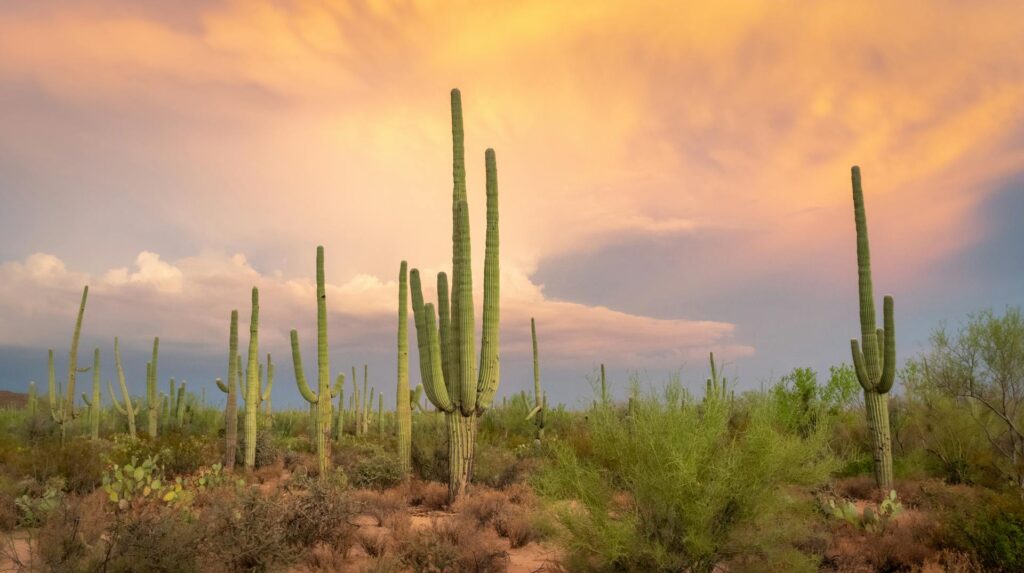
Interpretive walks and talks in the saguaro country, where the group is spread along a path in bright light and a describer is naming plants and terrain nobody in the party has words for yet.
The kind of site that is a zoo, a botanical garden and a natural history museum at once, so a single afternoon runs through animal talks, plant walks and gallery displays and needs all three treated differently.
Hangar floors and outdoor rows of aircraft, where the vocabulary is technical, the acoustics are enormous, and a captioner's feed matters far more than a captioner's screen size.
Exhibitions and artist talks drawing on the art of the Southwest and of Mexico, where a good deal of the wall text and much of the conversation is already bilingual before we are involved.
Teaching, research seminars and the public events a large campus runs alongside them, including the international visitors who attend those and use neither English nor ASL.
Appointments, consultations and community health sessions handled under minimal-disclosure practice, and the one setting on this list where a family member must never be the interpreter.
Hearings, city and county sessions and consultation evenings, where comment arrives in whichever language the speaker chose and the record has to carry all of it.
Where Tucson bookings land
Tucson's attractions are mostly outdoors and mostly hot, which decides more about an accommodation here than the subject matter does. These are the sites the requests keep naming.
Guided walks among the giant saguaro, in full sun and well away from power. ASL interpreting and audio description happen on the trail, with providers briefed on the route and the shade before the group sets off.
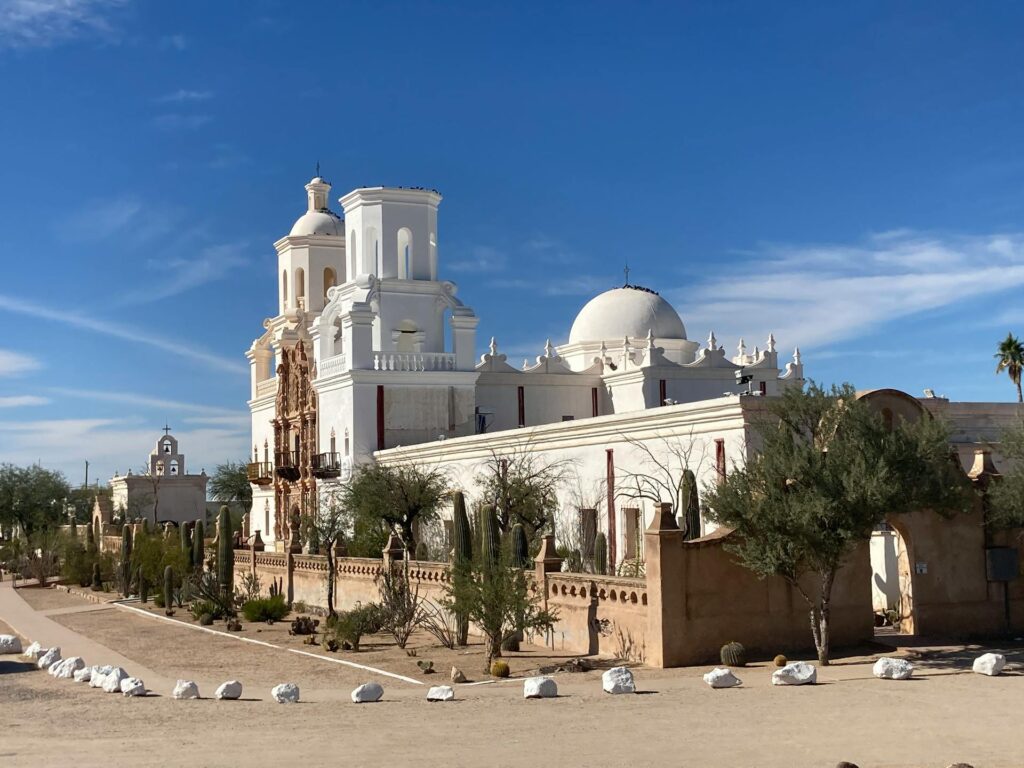
The White Dove of the Desert, an 18th-century Spanish Catholic mission still in use. Audio description carries the architecture and the interior on guided tours and at events.
Part zoo, part botanical garden, part natural history museum, and all of it about the Sonoran Desert. ASL interpreters, live captioning and audio description cover the education programme across the whole site.
One of the largest aviation collections in the world, over 350 aircraft across indoor halls and open apron. Live captioning and ASL interpreting cover tours and presentations in both.
Downtown, and a collection centred on the art of the American Southwest. ASL interpreting, live captioning and multilingual translation cover exhibits and special events.
Working in Tucson
A first reply from us is mostly questions, and on a Tucson date they are the same three every time: the languages that will be spoken from the front, the languages your audience uses, and which of those two you have actual evidence for. Accommodations are chosen after that — a pair that can be carried live, a pair better served by translated material that outlasts the day, and occasionally a pair we have to tell you we cannot fill. That last answer is uncommon, and it arrives in the first reply rather than in the week of, because a pair quietly dropped does more damage than one that was never promised.
Client Stories
4.8 · Based on 240 Reviews
Carrie Heitman
"I can not recommend ICS highly enough. Hook & Eye Theater had a wonderful experience working with Shelby and the team at ICS from beginning to end. What an incredible organization serving the theatrical community and beyond."
Frank Starling
"Accessibility is an essential part of inclusion, and Inclusive Communication Services delivered it with excellence at Cannes Lions International Festival of Creativity. Their ASL interpreting, CART captioning, and service coordination teams supported our conference stages, networking spaces, and last-minute changes with calm professionalism and deep care."
Christina Dixon
"I had the pleasure of seeing the ICS American Sign Language interpreting team at a conference in San Francisco. Their professionalism and expertise puts them in a league of their own. Shelby and her team set the standard for professionalism, coordination, and accessibility."
Laura Mosteller
"Our company has been using ICS for years at our annual conference. Their kind and clear communication leading up to the event and their prompt arrival each day makes the choice a no-brainer."
Patrick McMullen
"Inclusive Communication Services did an amazing job at Cannes Lions Festival. They treated us with kindness and made sure we had full access to interpreters the whole time. It honestly felt like everything was normal."
Emily Johnson — AADMD
"We have loved working with ICS and appreciate their flexible approach to working with our budget. The services have been game changing for what we are able to provide."
What to expect
Tucson is among the longest journeys we make, and the numbers below are written to be kept rather than to look competitive.
How booking works
Who is speaking and in what, who is attending and in what, and whether either list came from an actual request rather than an assumption about the neighbourhood.
Which pairs one person can carry, which need a relay and therefore a second provider, and which are better answered with translated material than with somebody standing there on the day.
Itemised language by language, so a second or third can be added, deferred or dropped on its own — and so nobody has to approve a single total that hides which language cost what.
Providers get the terminology in every language involved, not only the one the agenda was written in, and a day-of contact number goes to whoever is actually running the room.
Frequently asked questions
Get started
One paragraph is enough to start: who will be speaking and in what, and who you expect to be listening. A price against each pair follows on the next working day — and where a pair is one we cannot fill, that is said plainly in the same reply.