Carrie Heitman
"I can not recommend ICS highly enough. Hook & Eye Theater had a wonderful experience working with Shelby and the team at ICS from beginning to end. What an incredible organization serving the theatrical community and beyond."
Areas We Serve · Seattle
Nobody books a Wednesday afternoon. Somebody still arrives.


The request with no event attached
Somebody walks up to a counter at twenty past two on a Wednesday and asks whether there is an interpreter. Nothing about that afternoon was booked, and there was no reason it should have been: the market trades every day, the galleries are open whether or not anything is programmed in them, the civic campus is a lawn and half a dozen buildings you can walk between without a ticket, and the ground runs tours and a shop between fixtures. And while somebody is standing at that counter you have no way of knowing which they are: a visitor passing through once, or a person who lives a few streets away and will be back next month.
That makes the hard question a staffing question about your own organisation rather than about ours. When somebody asks at a counter on a quiet afternoon, or emails three days out, who takes it, and what are they allowed to say? In practice the answer wants to be three separate answers. Some of it should never require a request at all — the orientation film already captioned, the audio guide already carrying description, the gallery sheet already in braille and large print, because those are made once and then serve everyone who arrives afterwards. Some of it a member of staff can set going inside a minute from a device at the desk — the request leaves immediately and a remote interpreter or captioner joins about a quarter of an hour later, which is the thing video coverage is genuinely good at. The rest is real scheduled work, and it carries a notice period.
Sorting your programme into those three is most of the job, and it is worth doing on a calm morning rather than at a counter with somebody waiting. We will do that sorting with you, produce the first tier once, stand behind the second, and staff the third. The measure of whether it worked is not the landmark event with an interpreter on the stage. It is whether a person who walked in on an unremarkable Wednesday got an answer better than being told somebody would look into it.

Where we work in Seattle
Coverage here is less a question of where than of when. Which days the doors are open, when the desk is staffed, where people are standing when they ask — those tell us far more about what your provision has to do than a list of addresses would. The city and King County are worked the same way regardless, the Eastside included.
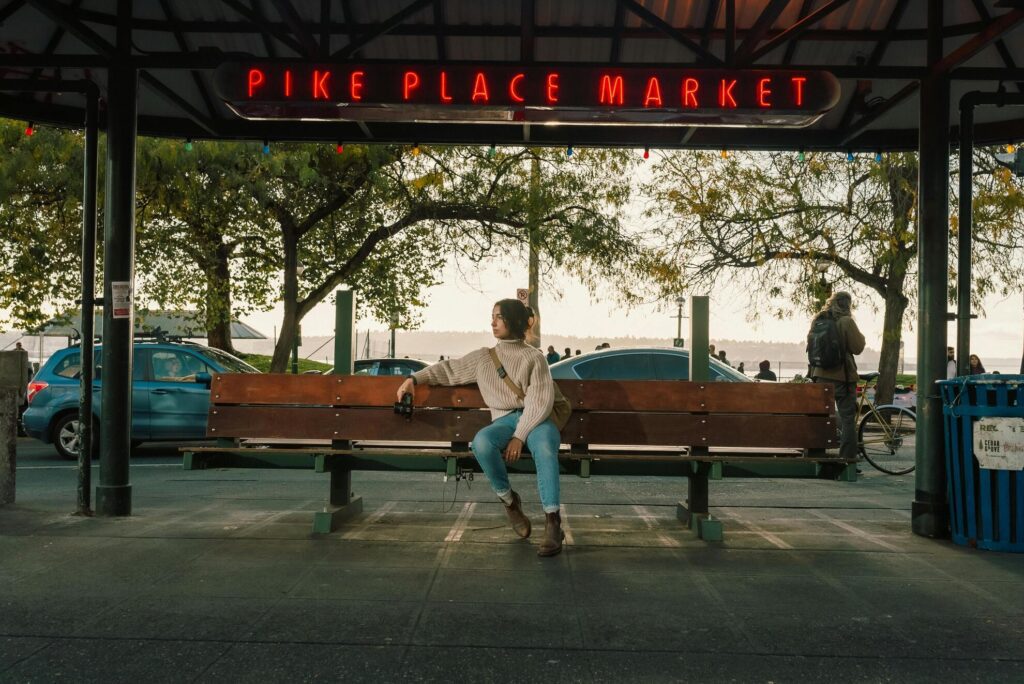
The public market above the piers, the art museum a few blocks from it, hotel meeting floors, and the city and county buildings in the blocks south of both.
Neighborhoods we cover
What we provide in Seattle
The first three below are commissioned once and are simply present from then on. The last three are people, and people have to be scheduled or dialled. Knowing which of your provision sits in which half is the whole of the planning.
Captions and multilingual subtitles for orientation film, exhibit media, recorded talks and internal broadcasts — made once, and after that nobody has to request them or be told they are unavailable today.
Learn more about Video Captions & SubtitlesSettings we staff here
Half of these can attach a request to a booking, because somebody bought a ticket or reserved a place and there was a form to put it on. The other half cannot: the doors are simply open, so whatever provision exists has to be in the building already, or something a member of staff can start from a desk on the spot and have on screen inside the quarter hour.

Trading floors, stalls and the walkways around them, where there is no ticket, no seat and no start time, and the request arrives at whichever counter looked most likely to help.
Permanent collections and touring exhibitions, where a described audio guide and captioned exhibit film cover the ordinary weekday and staffed tours cover the advertised ones.
A site with several buildings, a lawn and a programme that changes weekly, where an accommodation booked for one venue on it does not automatically follow a visitor to the next.
Historic downtown houses taking in productions that move on, where the accessible performance is scheduled well in advance and the audience for it plans around that date.
Fixtures, tours and concourse services at the grounds south of downtown, where what reaches the video board and what reaches a single seat are two different pieces of work.
Branch desks, licensing and benefits counters and information points, which have the least warning of anything on this list and the strongest claim to answering anyway.
Internal briefings, training and recurring team meetings for a workforce spread across buildings and time zones, where the stream and its recording matter as much as the room.
Appointments, consultations and family conversations under minimal-disclosure practice, where the request usually comes from the patient rather than from the institution.
Where Seattle bookings land
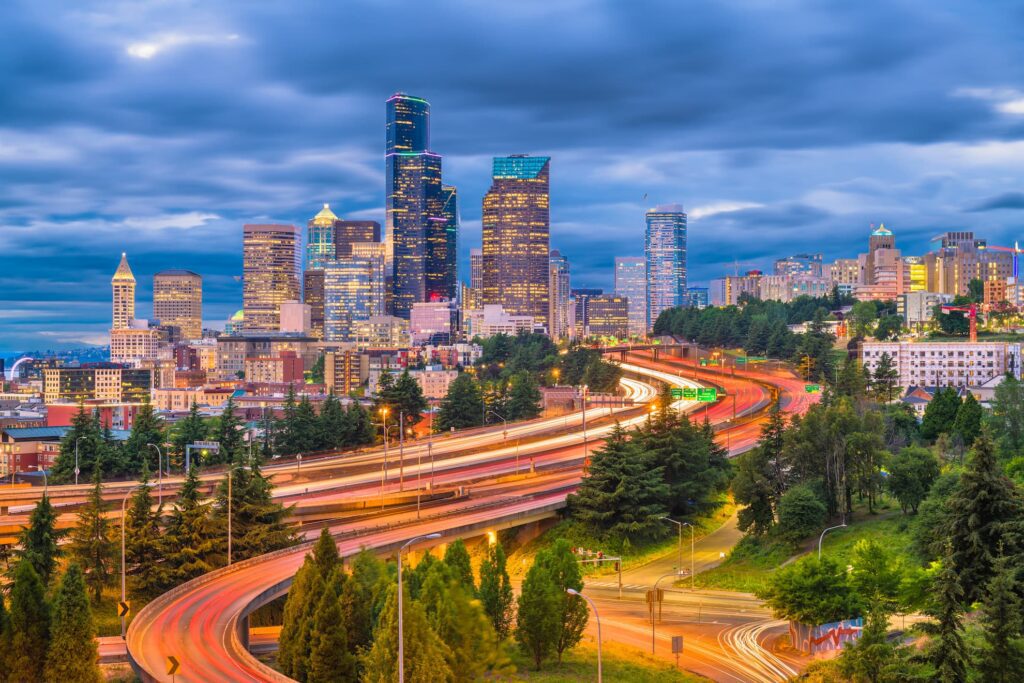
Seattle's access requests come from a short walk of downtown and the civic campus north of it, plus the two stadiums south of Pioneer Square that run on their own calendar.
Audio description carries the collection for blind and low-vision visitors; document and media translation opens the written material to visitors arriving in another language.
Events, performances and daily trade across a site that is loud and permanently crowded. Sign language interpreting and live captioning are what make an announcement here reach anyone who cannot hear it.
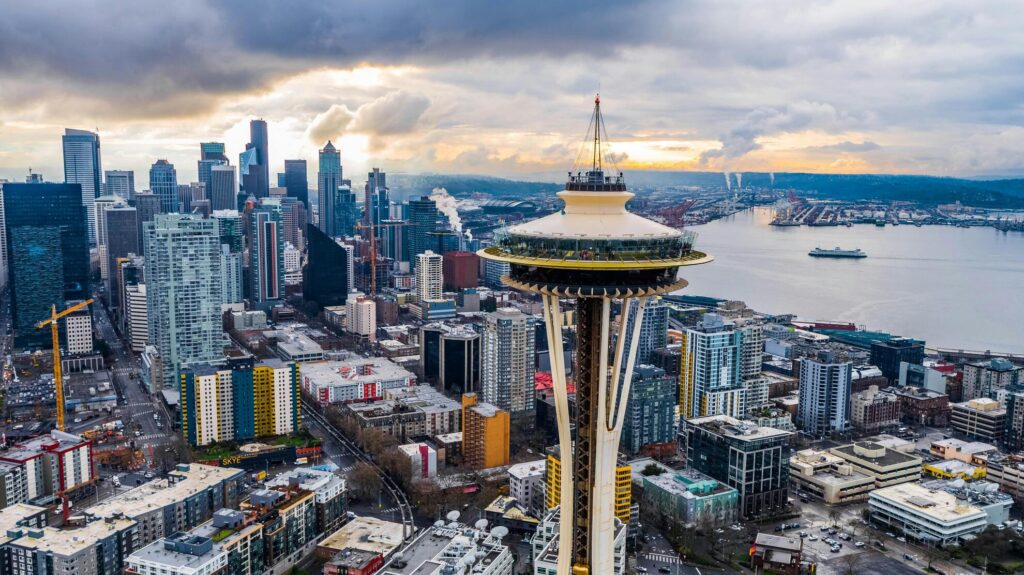
Concerts, public art and civic programming across the campus. Interpreting, live captioning, audio description and multilingual subtitles are booked together, because Seattle Center's events rarely need only one.
The historic Pine Street house. Multilingual subtitles, audio description and live captioning let non-English-speaking, blind and Deaf patrons share the same performance.
A multi-stage weekend that needs ASL interpreting and live captioning planned per stage, not per festival — an attendee who moves between stages should not lose access on the way.
A Seahawks game or a Mariners afternoon runs the same accommodations: an interpreter in view of the section, captions on the board, and a named coordinator reachable during play.
Working in Seattle
Scheduled work here is unremarkable: send a date and a setting and it is staffed. The requests that come apart are the other kind — the ones that arrive from a member of the public with no date attached, addressed to whoever happened to answer. Those are worth designing for in advance rather than improvising on the day, which means agreeing what needs no request at all, what a counter can act on immediately, and what genuinely carries a notice period your staff can state without going to check. We will sort a programme into those three with you and then supply against all of them, rather than quoting a number of interpreters and leaving the routing to whoever is nearest the phone.
Client Stories
4.8 · Based on 240 Reviews
Carrie Heitman
"I can not recommend ICS highly enough. Hook & Eye Theater had a wonderful experience working with Shelby and the team at ICS from beginning to end. What an incredible organization serving the theatrical community and beyond."
Frank Starling
"Accessibility is an essential part of inclusion, and Inclusive Communication Services delivered it with excellence at Cannes Lions International Festival of Creativity. Their ASL interpreting, CART captioning, and service coordination teams supported our conference stages, networking spaces, and last-minute changes with calm professionalism and deep care."
Christina Dixon
"I had the pleasure of seeing the ICS American Sign Language interpreting team at a conference in San Francisco. Their professionalism and expertise puts them in a league of their own. Shelby and her team set the standard for professionalism, coordination, and accessibility."
Laura Mosteller
"Our company has been using ICS for years at our annual conference. Their kind and clear communication leading up to the event and their prompt arrival each day makes the choice a no-brainer."
Patrick McMullen
"Inclusive Communication Services did an amazing job at Cannes Lions Festival. They treated us with kindness and made sure we had full access to interpreters the whole time. It honestly felt like everything was normal."
Emily Johnson — AADMD
"We have loved working with ICS and appreciate their flexible approach to working with our budget. The services have been game changing for what we are able to provide."
What to expect
A visitor experiences only the last of these four. The three above it are the machinery behind that one.
How booking works
Hours, buildings, which counters are staffed, and what people already ask for when they arrive. If requests currently reach three different inboxes, that is worth saying out loud too.
What should be built in and never requested, what a member of staff can start from a device in under a minute, and what has to be scheduled — with the notice period written next to it.
Captions, described audio, braille and large print are produced, checked with you and handed over, after which they are part of the visit rather than a service anyone has to book.
One route for scheduled requests and one for immediate ones, both given to the people who actually stand at the counter, so nobody is improvising an answer in front of a visitor.
Frequently asked questions
Get started
You do not need a date for this conversation — your opening hours, the counters people actually approach, and the questions your staff already get are enough to begin. A plan comes back on the next working day in three parts: what to build in once, what a member of staff can start immediately, and what needs a date in the diary.