Accessibility
VRI vs. On-Site Interpreting: How to Choose
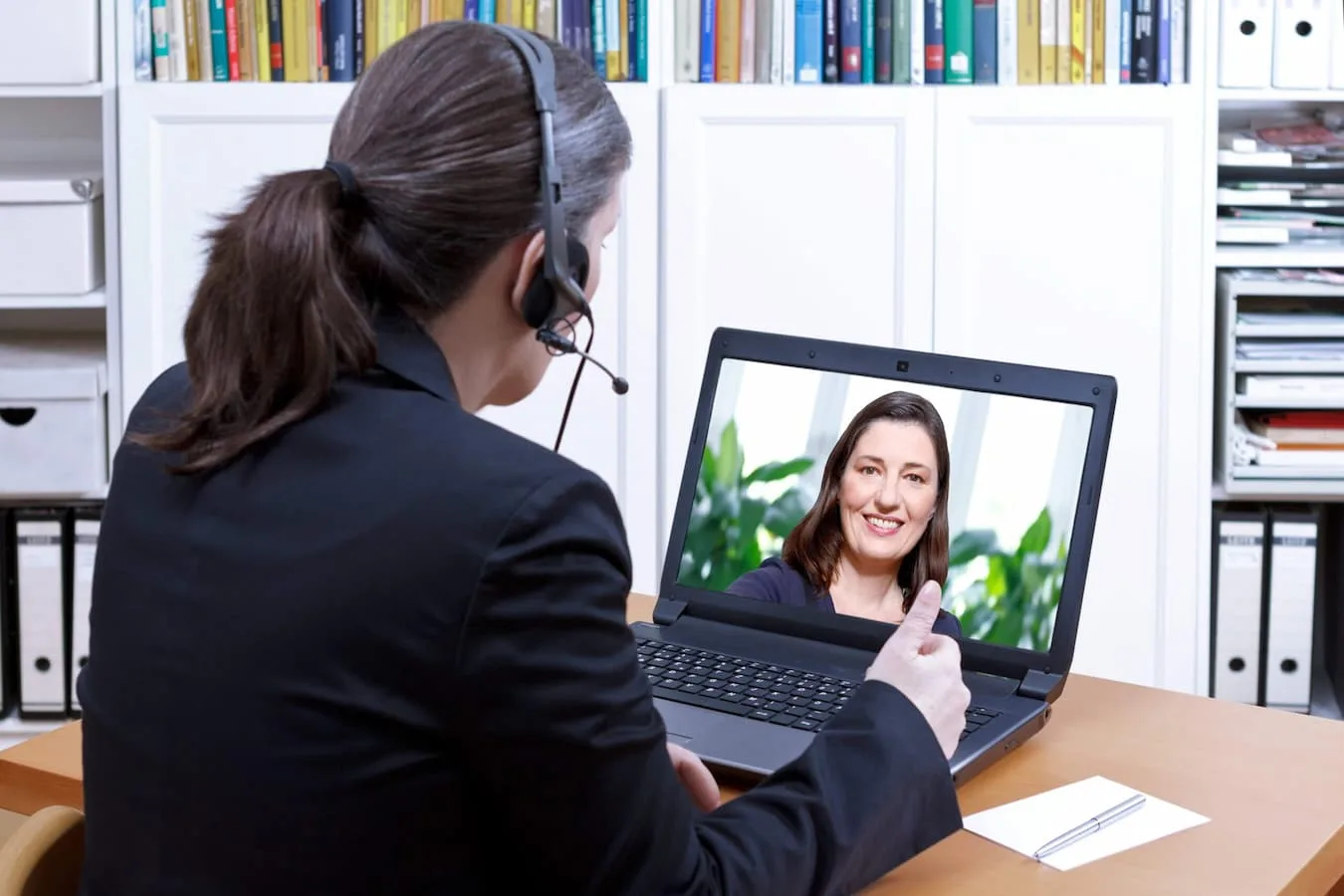
A practical comparison for event planners, coordinators, and access leads weighing Video Remote Interpreting against sending an interpreter in person.
July 10, 2026 · 3 min read
By Kaycee Summers · · 4 min read
Last updated
You've made the important decision to include a Deaf and Hearing Interpreter Team for your upcoming event, recognizing the critical role this team plays in providing inclusive communication. Now, let's delve into the critical next step: setting the stage for success. In the world of signed languages, visual space takes careful consideration. This article explores essential considerations like seating arrangements, sightlines, and camera placements, all of which Inclusive Communication Services (ICS) recommends to ensure optimal accessibility for your conference. To start, let’s establish the basics, what exactly is a Deaf and Hearing Interpreter Team?
A Deaf Interpreter (DI) is an individual who is Deaf with specialized training to interpret between ASL and English. They possess a unique set of formative linguistic, cultural, and life experiences that enable them to navigate a wide range of visual language and communication methods influenced by factors such as region, culture, age, and literacy.
A Deaf Interpreter often collaborates with a hearing interpreter to form a powerful team that facilitates effective communication for Deaf and hearing individuals. The team offers a level of linguistic and cultural bridging that can be challenging for hearing ASL-English interpreters to achieve when working alone. For a more comprehensive understanding of this team dynamic, we invite you to read our blog, Deaf Interpreter and Hearing Interpreter Teams: An Inclusive Guide.
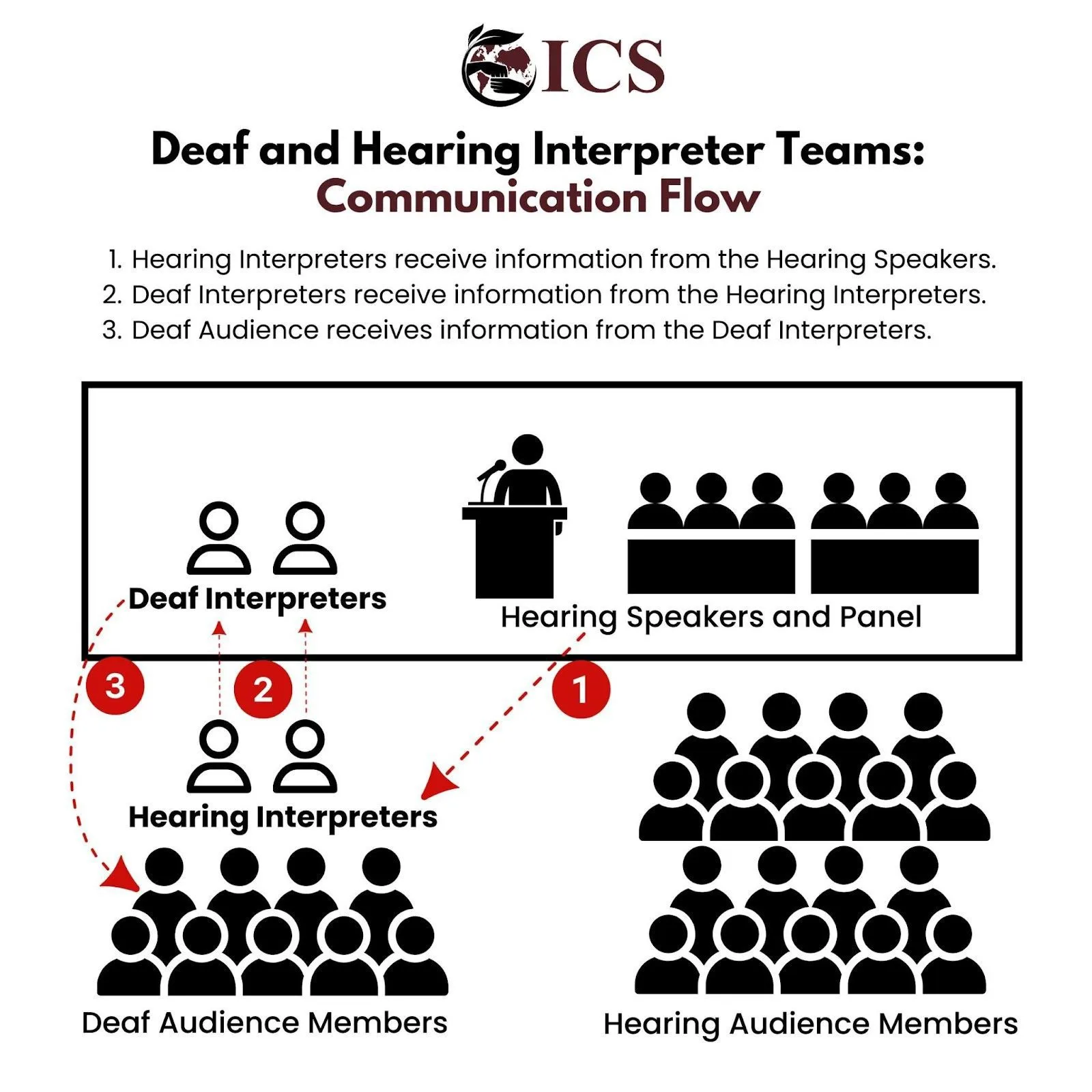
The journey of making conference communications more accessible begins with hearing speakers and panelists addressing the audience in their natural speaking pace and tone of voice. From there, hearing interpreters, positioned in front of or adjacent to the audience, will listen and process the speakers’ information, transmitting it into visual sign language in real-time for the Deaf Interpreters. On the stage, the Deaf Interpreter then watches the hearing interpreters, receives the speaker’s information through sign language, and ultimately relays it to the Deaf audience members in more native and easily understood sign language. When implemented correctly, Deaf audience members are able to understand the speakers’ message with enhanced understanding and attention to detail, perceiving the information in their native sign language.
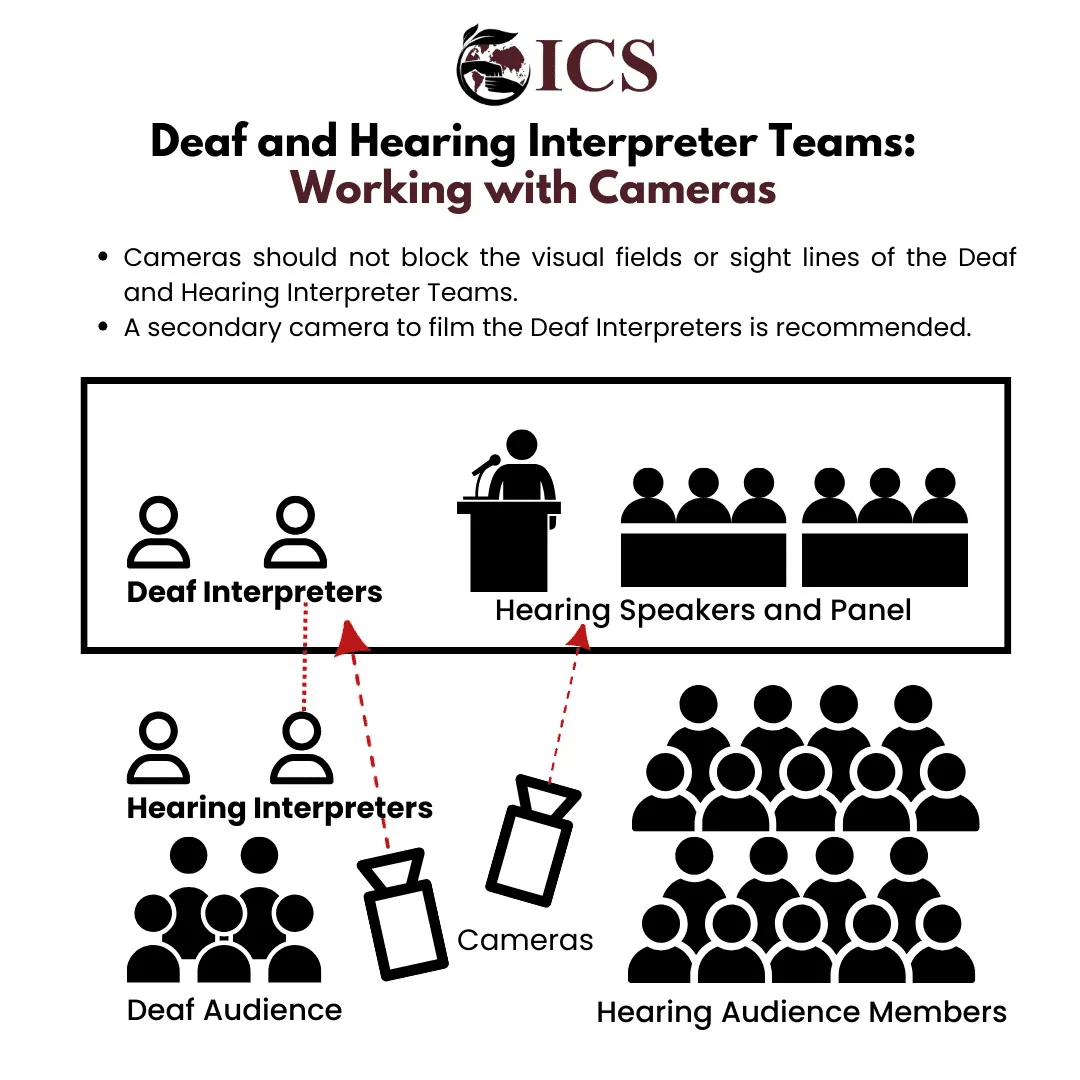
In instances which it is not feasible for a Deaf Interpreter to be on stage or which require accessibility for a virtual audience, it is advised to project and stream the Deaf Interpreters to provide equal-access for Deaf audience members attending in-person or online. To create a user-friendly viewing experience, ICS recommends setting up a secondary camera and, if needed, special lighting to capture the Deaf Interpreters’ output. In scenarios where a camera is focused on a single presenter, interpreter teams can physically switch positions during role rotations to avoid the camera constantly panning back and forth between the interpreters. This footage can seamlessly integrate into your onsite event via a projector and into your virtual event through Picture-in-Picture (PIP) format. Even better, including interpreters in your virtual live stream allows you to save the event to your archives with integrated accessibility.
When positioning the camera for a Deaf Interpreter, it is crucial to avoid obstructing the visual fields or sightlines of the Deaf and Hearing Interpreter Teams working onsite. Additionally, ensuring that Deaf audience members have an unobstructed view of the Deaf Interpreters on stage is essential. This approach enhances the overall accessibility and inclusivity of your conference.
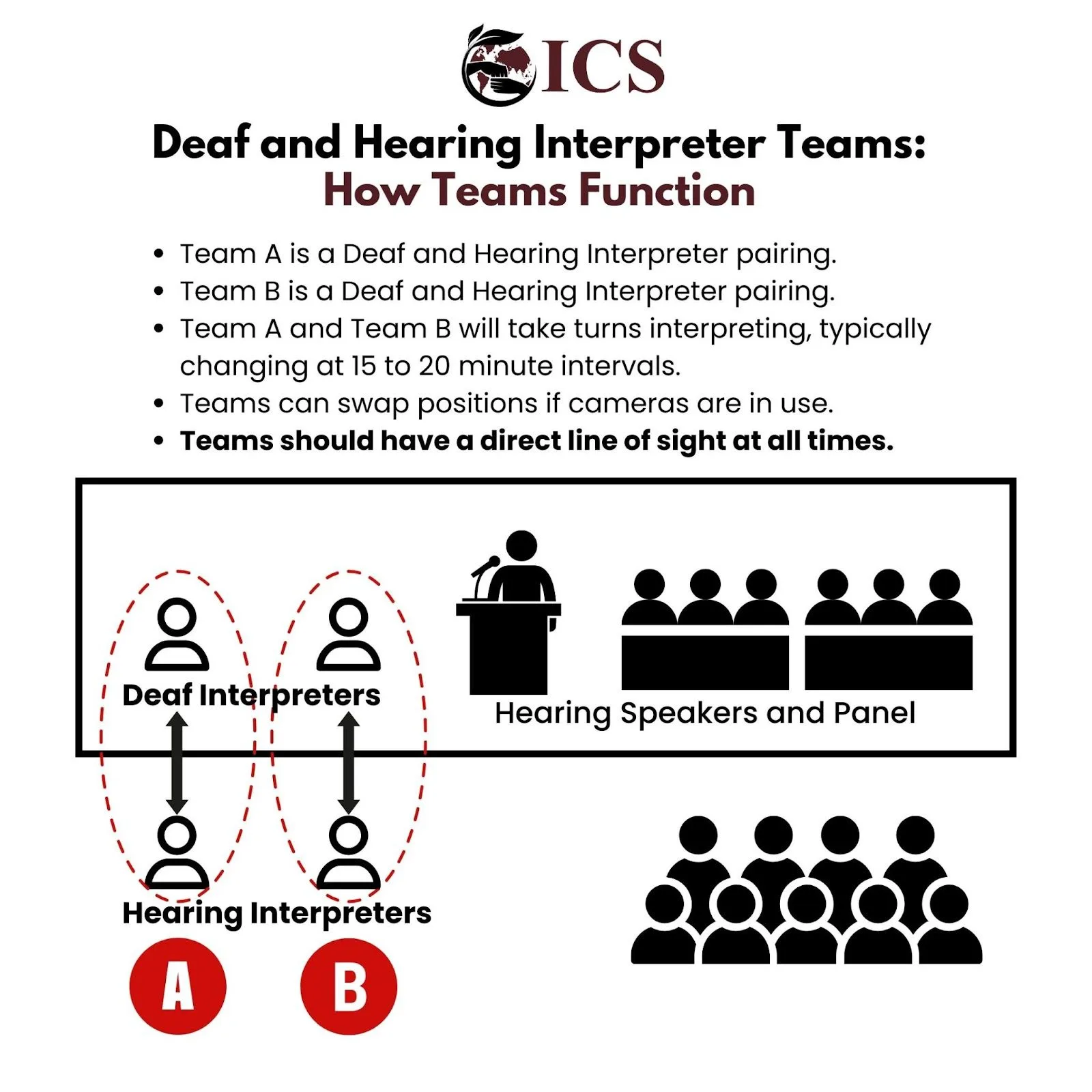
Deaf Interpreters and Hearing Interpreters operate as a team through a dynamic process that requires regular switching. The interpreters alternate roles between active interpreting and support interpreting to prevent fatigue and to maintain the accuracy of the target message.
These teams consist of two or more pairs, each including a Deaf and Hearing Interpreter, which we will refer to as Team A and Team B. Each team forms a two-person communication chain between the Deaf and hearing parties, with Team A alternating with Team B approximately every 15 to 20 minutes of consecutive interpreting. This regular rotation allows each interpreter an ample recovery period, preventing fatigue and preserving the accuracy of the source and target message.
To prevent interruptions or distractions during your event, interpreters will attempt to switch during natural transitions in your agenda or content. If a smooth transition is critical to your event’s success, you might consider working with your designated accessibility service coordinator or interpreters to create a timeline of appropriate transition points.
By prioritizing considerations such as seating arrangements, sightlines, camera placements, and professional sign language interpreters, you're well on your way to fostering an inclusive environment where everyone can participate fully and equally in your conference.
For any additional questions or concerns, and to further tailor these best practices to your specific event, we encourage you to schedule a free consultation session with Inclusive Communication Services (ICS). Our experience and expertise in the accessibility field make ICS uniquely qualified to share valuable insights and guidance with your event planning team, ensuring that your conference achieves the highest standards of accessibility. Together, we can set the stage for a conference that truly exemplifies the power of inclusive communication.

Kaycee Summers
Trouble with the form? Open it in a new tab.
Tell us what you’re planning and a coordinator will come back with options and pricing.
A practical comparison for event planners, coordinators, and access leads weighing Video Remote Interpreting against sending an interpreter in person.
July 10, 2026 · 3 min read
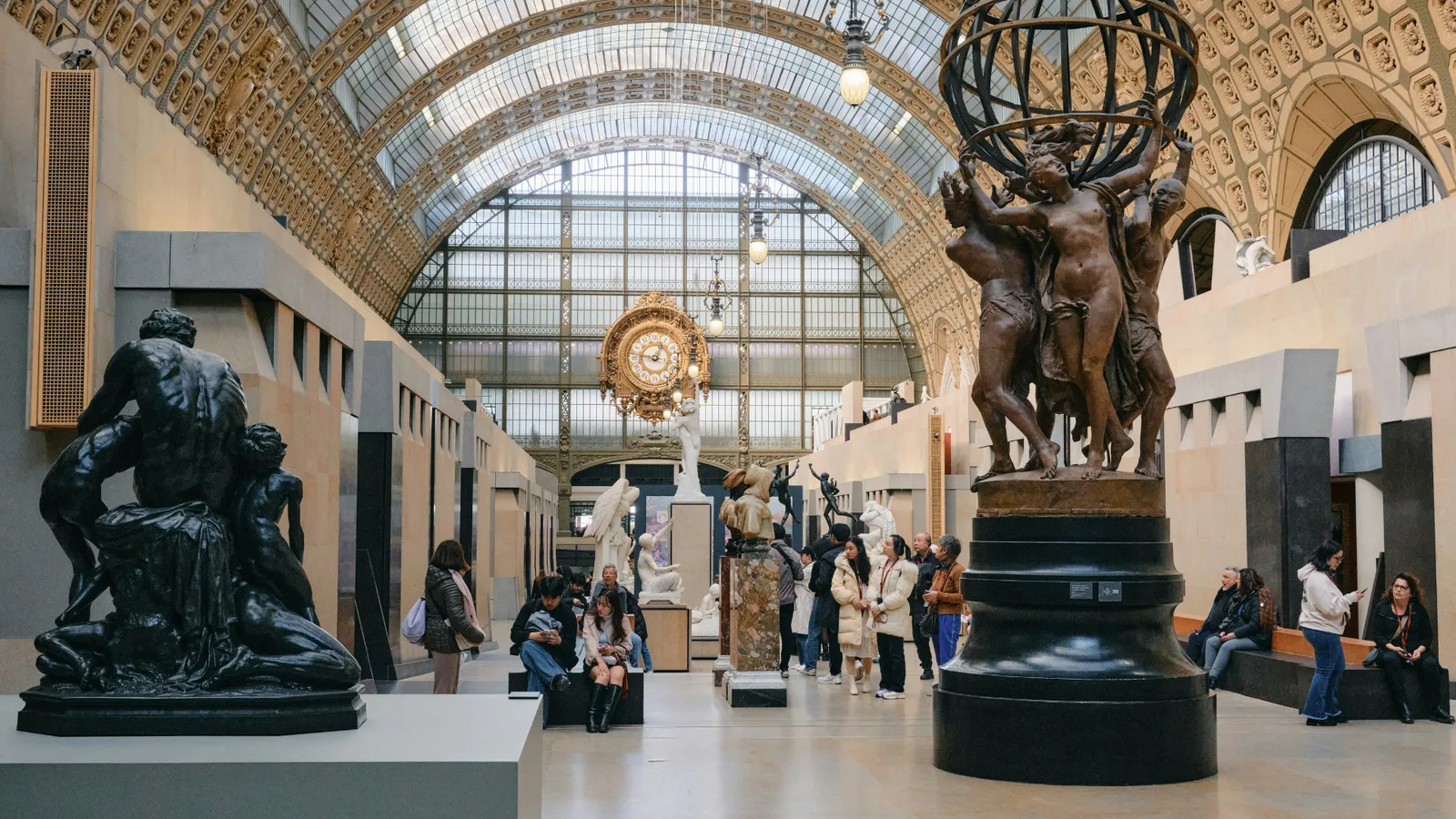
I went to a popular historical museum in North Carolina with my mother to celebrate our spring birthdays. We joined the line, sent our backpacks through security, and walked over to pick up the audio…
May 8, 2026 · 6 min read
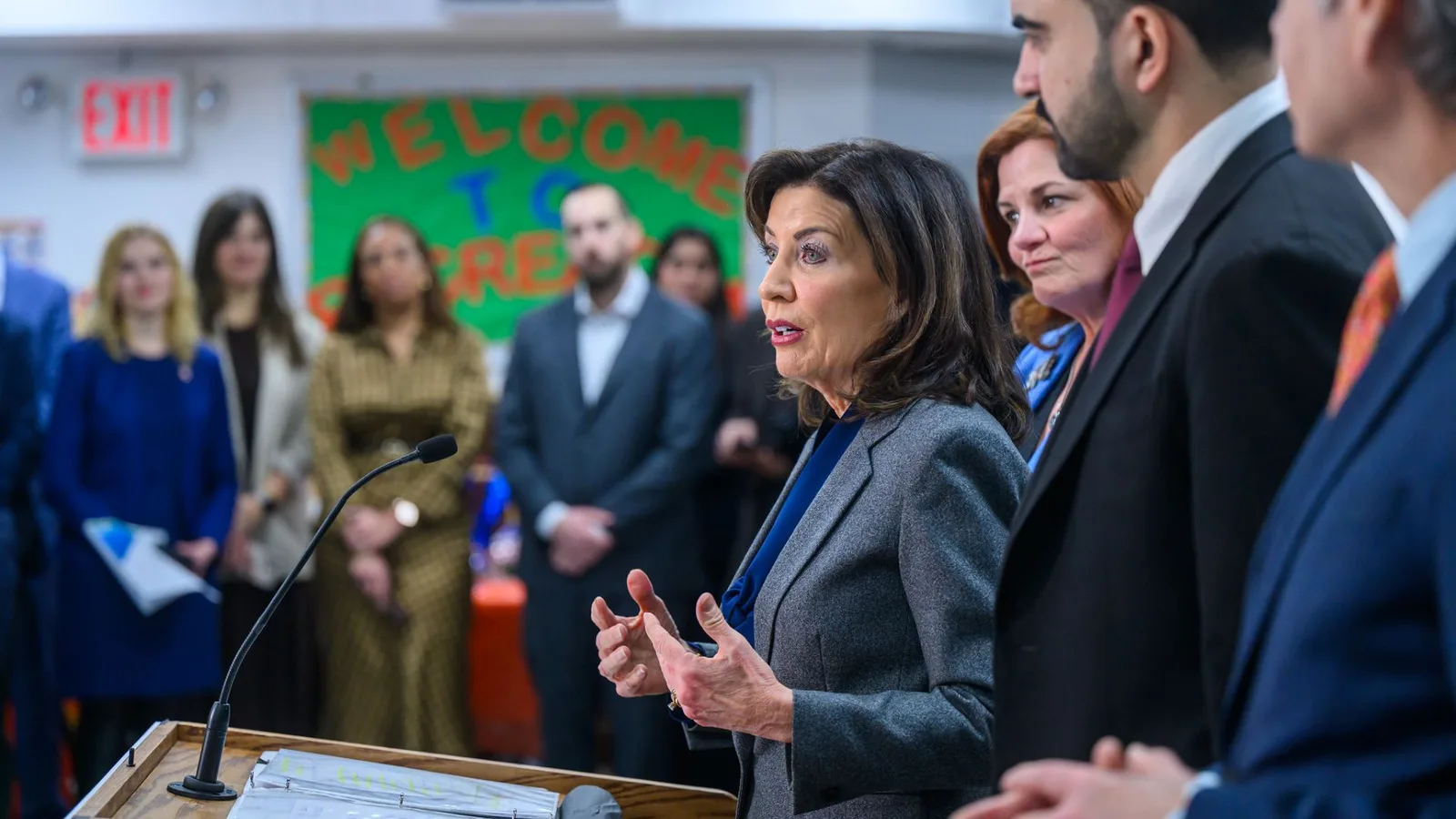
Four years after The Expanded Language Access Law was adopted in New York, state representatives are now opening discussions around the official inclusion of American Sign Language (ASL). This blog lo…
April 18, 2026 · 4 min read