
Accessibility
VRI vs. On-Site Interpreting: How to Choose
A practical comparison for event planners, coordinators, and access leads weighing Video Remote Interpreting against sending an interpreter in person.
July 10, 2026 · 3 min read
By Nora Broz · · 2 min read
Last updated
In today's digital landscape, effective communication and inclusivity are crucial. It's essential to ensure that your content reaches a diverse audience and leaves no one behind. That's where Sign Language Video Translation comes into play. In this article , we'll explore the importance of Sign Language Video Translation and how it revolutionizes accessibility to video and audio media.
Imagine having a recorded webinar, presentation, or promotional video that you're eager to share. You want to expand your reach and engage with a broader audience. However, you may not realize that relying solely on subtitles might not suffice for individuals who communicate using signed languages like American Sign Language (ASL). This is where Sign Language Translation steps in as a game-changer.
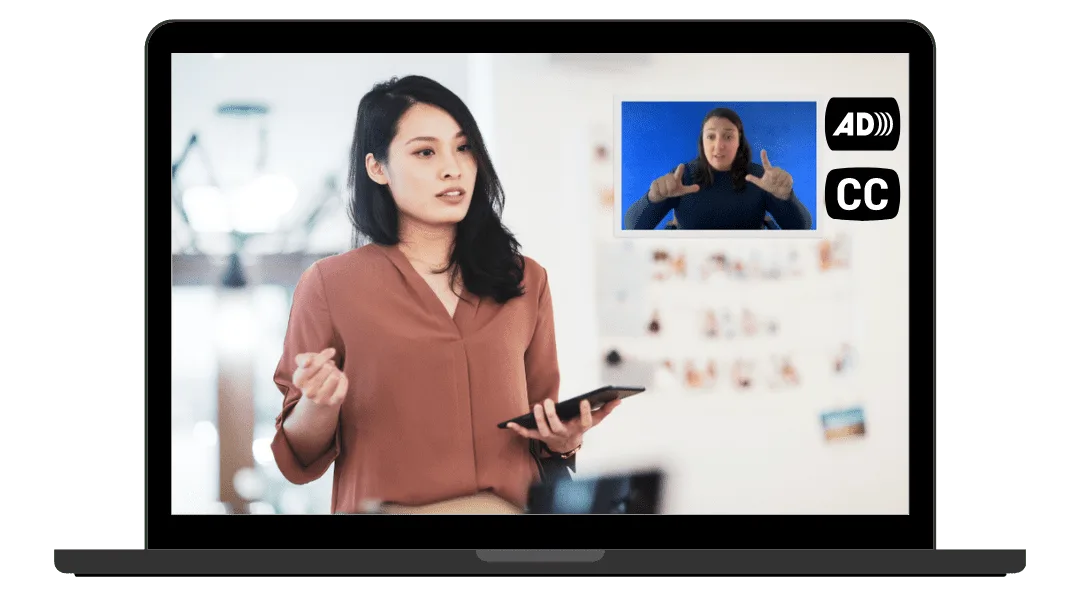
Video translation is a feature that seamlessly incorporates a sign language interpreter into video content. It involves an inset window within the video stream, enabling viewers to simultaneously watch the content and the sign language interpreter within the same screen. Unlike subtitles, Video Translation, also referred to as picture-in-picture sign language translation, captures the rich nuances of signed languages, making it a more accurate and inclusive communication channel.
Here's why Sign Language Video Translation Matters:
1. Expanding Your Reach
With nearly 5.5 million employees with disabilities in the United States, incorporating Sign Language Video Translation can significantly increase views of your content and raise awareness of your inclusive brand. By making your videos accessible, you tap into an audience that would otherwise be unable to fully engage with your content.
2. Bridging Communication Gaps
Signed languages, such as ASL, have their own unique grammar, syntax, and structures. They are distinct languages, separate from spoken English. Translation provides an equal-access solution by bridging the communication gap between signed languages and spoken languages. By integrating a sign language interpreter into your videos, you ensure that individuals who rely on signed languages can access and understand your content effectively.
3. Demonstrating Inclusivity
Inclusion is not just a buzzword; it's a fundamental value that drives positive change. By embracing Sign Language Video Translation, you demonstrate your organization's commitment to inclusivity and accessibility. It showcases that you value diversity and are actively working to remove barriers for individuals with disabilities. By doing so, you position your brand as an advocate for equal access and make a lasting impression on your audience.
Don't let potential customers or followers miss out on your valuable content due to accessibility limitations. With Accessible Media Services like Sign Language Video Translation, you can expand your viewer audience while demonstrating your commitment to inclusion and equal access.
To learn more about how Sign Language Video Translation can benefit your organization and create a more inclusive world, check out our accessible media services or contact our team today. We're here to help you break down communication barriers and ensure that your videos are accessible to everyone, regardless of their preferred language
Remember, accessibility is not just an option; it's a necessity. By embracing Sign Language Video Translation, you not only improve the accessibility of your video and audio content but also create a positive impact on individuals' lives. Start making a difference today!

Nora Broz
Trouble with the form? Open it in a new tab.
Tell us what you’re planning and a coordinator will come back with options and pricing.
A practical comparison for event planners, coordinators, and access leads weighing Video Remote Interpreting against sending an interpreter in person.
July 10, 2026 · 3 min read
I went to a popular historical museum in North Carolina with my mother to celebrate our spring birthdays. We joined the line, sent our backpacks through security, and walked over to pick up the audio…
May 8, 2026 · 6 min read
Four years after The Expanded Language Access Law was adopted in New York, state representatives are now opening discussions around the official inclusion of American Sign Language (ASL). This blog lo…
April 18, 2026 · 4 min read