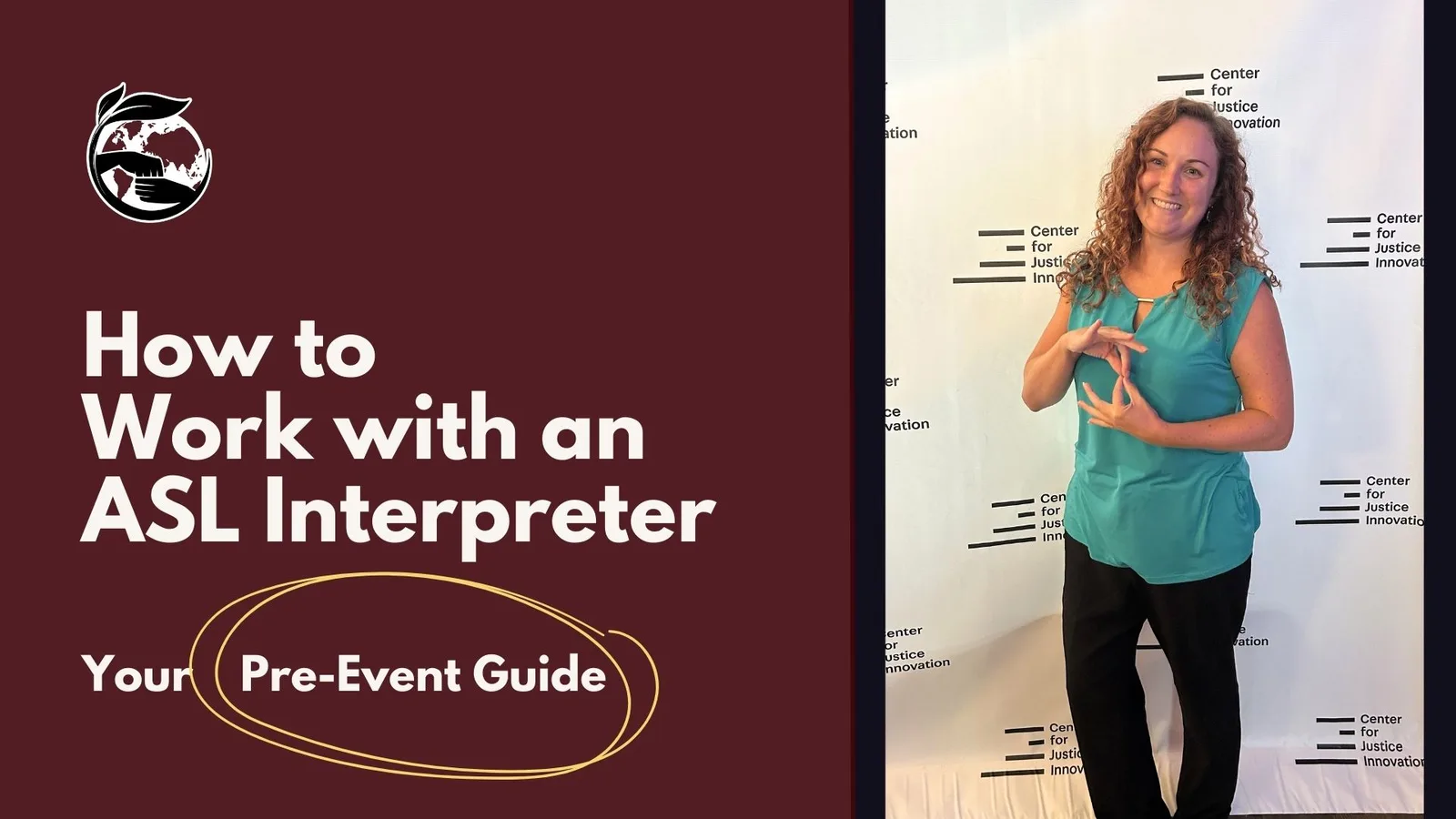
How to Work with an ASL Interpreter: Your Pre-Event Guide
By Nora Broz · · 3 min read
Last updated
Getting your event ready for sign language interpreting services doesn’t have to be complicated, but a little preparation goes a long way. This inclusive guide gives you a clear rundown on how to get set-up to work effectively with ASL interpreters
I’m Nora from Inclusive Communication Services (ICS), and I work with interpreters primarily behind the camera, creating accessible media. This is the guide I wish I’d had when I first started in the accessibility industry. I genuinely enjoy working with sign language interpreters, and learning the ins and outs of the trade has given me a deeper understanding. So let’s get started!
7 Steps to Take Before your Interpreted Event
When time and planning allow it’s best to complete the steps below as soon as you can. Occasionally, this means a few weeks before the event; but more often than not, events change and plans grow - - no matter what, we recommend completing these steps even on the day of.
Learn your interpreter’s name
While the good manners-factor is self-evident, knowing your interpreter’s name is useful in other ways as well. Names provide a level of trust.
You will be able to introduce them to your audience and provide clearer communication to them specifically when needed. This leads us to our next point…
Introduce the interpreter to all on-site personnel they will interact with
This will help them identify who they will be interpreting for and they can ensure that they are placed strategically so that all people in need of their services will have access to them.
Allow the interpreter to see the space so that they can plan and advise on setup best practices
Allow your interpreter to position themselves allowing communication to be effective and efficient.
Know the interpreter’s comfort level/expertise with the topics to be covered
ASL Interpreters are fluent professionals in American Sign Language but not necessarily all of the topics you will be covering at your event. At ICS, our interpreters are vetted for each job they work on and selected to ensure that they are familiar with the general topics of discussion and able to communicate at a high level.
As a best practice, set aside a few minutes before your event to bring your interpreter up to speed on the topics you’ll cover - - especially since change and innovation are inevitable.
Provide the interpreter with any materials that would allow them to familiarize themselves with the content in advance
If there are slide decks or other presentation materials, this will allow the interpreters to prepare unique terminology before the event.
This step may not always be possible, but it’s a tremendous asset to both the interpreter team and your audience.
Make sure the interpreter is positioned where they can clearly see and be seen by the speaker, on-camera talent, and audience
If the interpreter needs to be seen on screen for broadcast or online media: give special attention to positioning, allowing for proper lighting and camera framing.
A designated standing spot can be marked with tape if needed, and a chair or stool is always appreciated for longer interpreting sessions.
Allow the interpreter time to take a break if the content is strenuous
ASL Interpreting is both mentally and physically challenging. Speech that flows quickly or has multiple speakers will require a team of two interpreters to make sure that all communication is interpreted effectively and without undue strain on an interpreter’s body.
If you’d like to learn more about the importance of interpreting teams, I highly recommend checking out this blog article: It takes 2!
Setting the Stage for Access
And that’s your basic checklist for preparing for an ASL interpreted event. Taking a few simple steps ahead of time helps ensure your message is communicated clearly, your interpreter team is set up for success, and your audience has a positive experience. A little planning goes a long way!
About the author
Nora Broz
Nora is a key player in shaping a more inclusive future in today’s tech-driven world. As our Accessible Media Coordinator, she leads efforts to enhance accessibility across all media platforms, from multilingual captioning to audio description, ensuring accommodations for every audience. Nora enjoys writing about assistive technology and digital accessibility, offering tips on everything from expanding podcast reach to ensuring videos are fully accessible. For more information on our staff, visit Our Team page.
As summer officially kicks off, I’ve had time to reflect after a busy spring in which our studio was booked with accessible shoots; from ASL sign language translation videos to audio descriptive museu…
Imagine the iconic scene from the movie "Love Actually" where Mark (Andrew Lincoln) turns up at Juliet's (Keira Knightley) house and professes his love for her with a series of cue cards. “To me you a…