Carrie Heitman
"I can not recommend ICS highly enough. Hook & Eye Theater had a wonderful experience working with Shelby and the team at ICS from beginning to end. What an incredible organization serving the theatrical community and beyond."
Areas We Serve · Detroit
Description, captions and translation built into the display, plus interpreters for the half of this city that happens live.


What actually needs the access here
A wall of industrial murals. A master tape cut in a house on West Grand Boulevard. A machine on a plinth, a market shed, a mile of riverfront. The collections this city is known for are made of things you look at, listen to, and walk through, and none of that is delivered by somebody standing at the front of a room translating a talk. A blind visitor at a mural and a Deaf visitor at a listening station are both looking straight at the exhibit and getting nothing from it.
So the accommodation has to live with the collection rather than beside it. Description written to the objects themselves, captions and subtitles on the exhibit media, translated wall text for visitors arriving from outside the country — these are made pieces, not appointments. They take research and a script and someone who knows the material, and once they exist they work for every visitor who comes through for as long as the display stands. That is a very different purchase from an hour of interpreting, and it should be budgeted as one.
The live half of the city still needs people, and needs them in the open air more often than in a lecture hall: a market morning, a riverfront tour, a stage, a public meeting. Those are staffed the way live work always is. The distinction worth drawing at the outset is which of the two you are commissioning, because one is booked against a date and the other is built against an opening.

Where we work in Detroit
The city and the communities around it. Say which sites are involved rather than just the address — a commission that covers three buildings under one organisation is scoped and priced once.
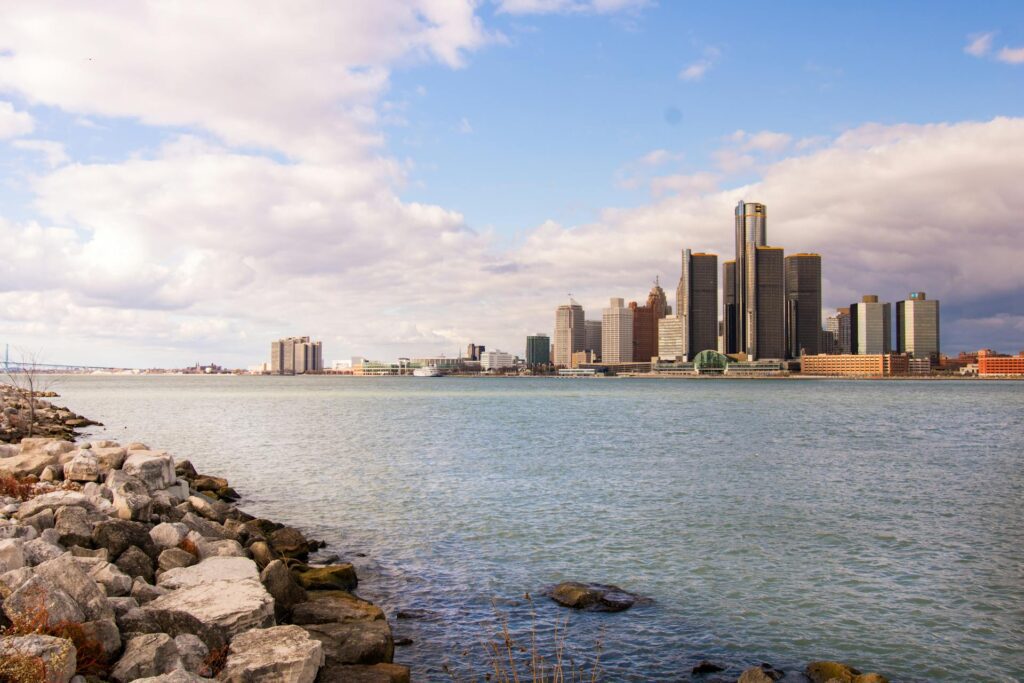
The riverwalk and its guided tours and events, the towers above it, city and county offices and the courts, and the theatres a few blocks north.
Neighborhoods we cover
What we provide in Detroit
The six below split cleanly in two, and a Detroit project usually wants both halves: providers in the building for what happens live, and finished description, captions and translation sitting inside the display itself.
Narration written to what is actually there — a mural's scale and colour, an engine's parts, a room laid out as it once was — recorded for the gallery or delivered live on a tour by a describer walking with the group.
Learn more about Audio DescriptionSettings we staff here
Half of what needs access on this list is not being spoken at all — a mural, a master tape, a machine on a plinth. The rest is being said out loud, usually over a crowd and often outdoors. Both are covered, but they are different commissions, and knowing which one you have is the whole of the first conversation.

Described tours and recorded description for the collections and the painted walls themselves, interpreted gallery talks, and translated wall material for international visitors.
Where the exhibit is a recording, the access has to be text and sign rather than better speakers — captioned playback, interpreted tours, and transcripts of what the room is playing.
Machines, vehicles and workshop reconstructions described in enough detail to be understood without seeing them, with demonstrations interpreted as they run.
Long chronological displays, where description and translated labels do more of the work than any single guided tour can.
Market mornings and neighbourhood events, where the interpreting follows people down the aisles and the languages being traded in change from stall to stall.
Walking and boat tours and waterfront events, where an interpreter has to be visible against open sky and audio description has to cope with wind and traffic.
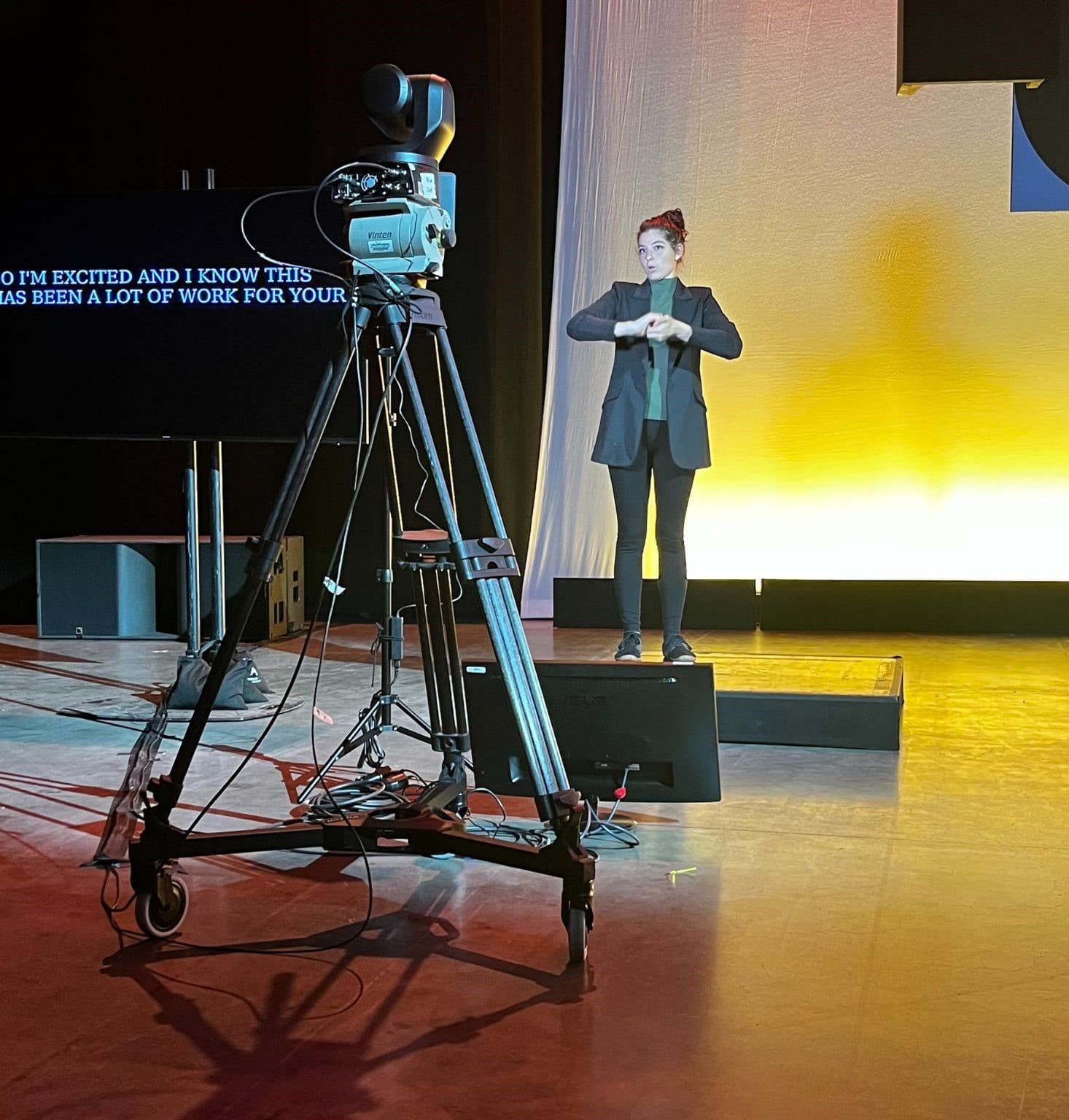
Performances interpreted into ASL and audio-described, with the team written into the lighting plot and the sightlines rather than tucked into whatever space is left over.
Hearings, community meetings and service appointments carrying ADA and language-access obligations, plus translation of the documents that go with them.
Where Detroit bookings land
Detroit's cultural institutions sit within a few blocks of each other in Midtown, with the market district and Dearborn either side. Between them they account for most of the city's access requests.

One of the oldest and largest year-round markets in the United States. On-site ASL and spoken language interpreting cover the market's events and the conversations across a stall, which is where most of the access actually happens.
The DIA holds one of the most significant collections in the country, including Diego Rivera's Detroit Industry Murals. Audio description opens the collection to blind and low-vision visitors; interpreting and captioning cover the tours and talks.
Hitsville U.S.A., and the birthplace of the Motown sound. ASL interpreting and live captioning on the tour route let everyone follow a story told almost entirely out loud.
A campus-sized collection running from historical automobiles to cultural artifacts. Audio description and ASL interpreting cover the exhibits; spoken language interpreting handles a visitor base that arrives from well beyond Michigan.
Midtown, and the city's own story from fur-trading post to the centre of the American automobile industry. Live captioning, ASL interpreting and multilingual translation cover the galleries and the public programme.
Working in Detroit
All of it can be commissioned across the city and the metro area around it — the art and history museums in Midtown, the music-history sites west of Woodward, the innovation collections out in Dearborn, the market sheds, the riverfront, the stages, the courts and the community meetings. What differs is the shape of the work. Live assignments are scoped to a date, staffed for the setting, and supported by a named coordinator who is reachable while they run. Produced access — description, captions, subtitles, braille — is scoped to a display instead: scripted, sent to you for approval, and then part of the exhibit for as long as it stands.
Client Stories
4.8 · Based on 240 Reviews
Carrie Heitman
"I can not recommend ICS highly enough. Hook & Eye Theater had a wonderful experience working with Shelby and the team at ICS from beginning to end. What an incredible organization serving the theatrical community and beyond."
Frank Starling
"Accessibility is an essential part of inclusion, and Inclusive Communication Services delivered it with excellence at Cannes Lions International Festival of Creativity. Their ASL interpreting, CART captioning, and service coordination teams supported our conference stages, networking spaces, and last-minute changes with calm professionalism and deep care."
Christina Dixon
"I had the pleasure of seeing the ICS American Sign Language interpreting team at a conference in San Francisco. Their professionalism and expertise puts them in a league of their own. Shelby and her team set the standard for professionalism, coordination, and accessibility."
Laura Mosteller
"Our company has been using ICS for years at our annual conference. Their kind and clear communication leading up to the event and their prompt arrival each day makes the choice a no-brainer."
Patrick McMullen
"Inclusive Communication Services did an amazing job at Cannes Lions Festival. They treated us with kindness and made sure we had full access to interpreters the whole time. It honestly felt like everything was normal."
Emily Johnson — AADMD
"We have loved working with ICS and appreciate their flexible approach to working with our budget. The services have been game changing for what we are able to provide."
What to expect
One half of this work needs somebody on a plane and the other half never leaves a studio. The windows below keep the two apart rather than averaging them into one figure.
How booking works
A date and a room, or a display and an opening. Send both if the project has both — a described exhibit and an interpreted launch night are one conversation, not two.
One named coordinator carries the whole commission, including the parts that run on a production schedule rather than a calendar date.
Produced work goes through research, a draft script and your sign-off before anything is recorded. Live work goes to providers matched on the subject, briefed with whatever material you can share.
People arrive early enough to see the space before it fills. Finished description, captions and braille are handed over in the formats your own systems already play and print, so nothing about them depends on us afterwards.
Frequently asked questions
Get started
A date and a venue, an exhibition and an opening, or both at once. You get both halves back the next working day: what we would staff, what we would build, and what each of them costs on its own.