
Accessibility
VRI vs. On-Site Interpreting: How to Choose
A practical comparison for event planners, coordinators, and access leads weighing Video Remote Interpreting against sending an interpreter in person.
July 10, 2026 · 3 min read
By Kaycee Summers · · 5 min read
Last updated
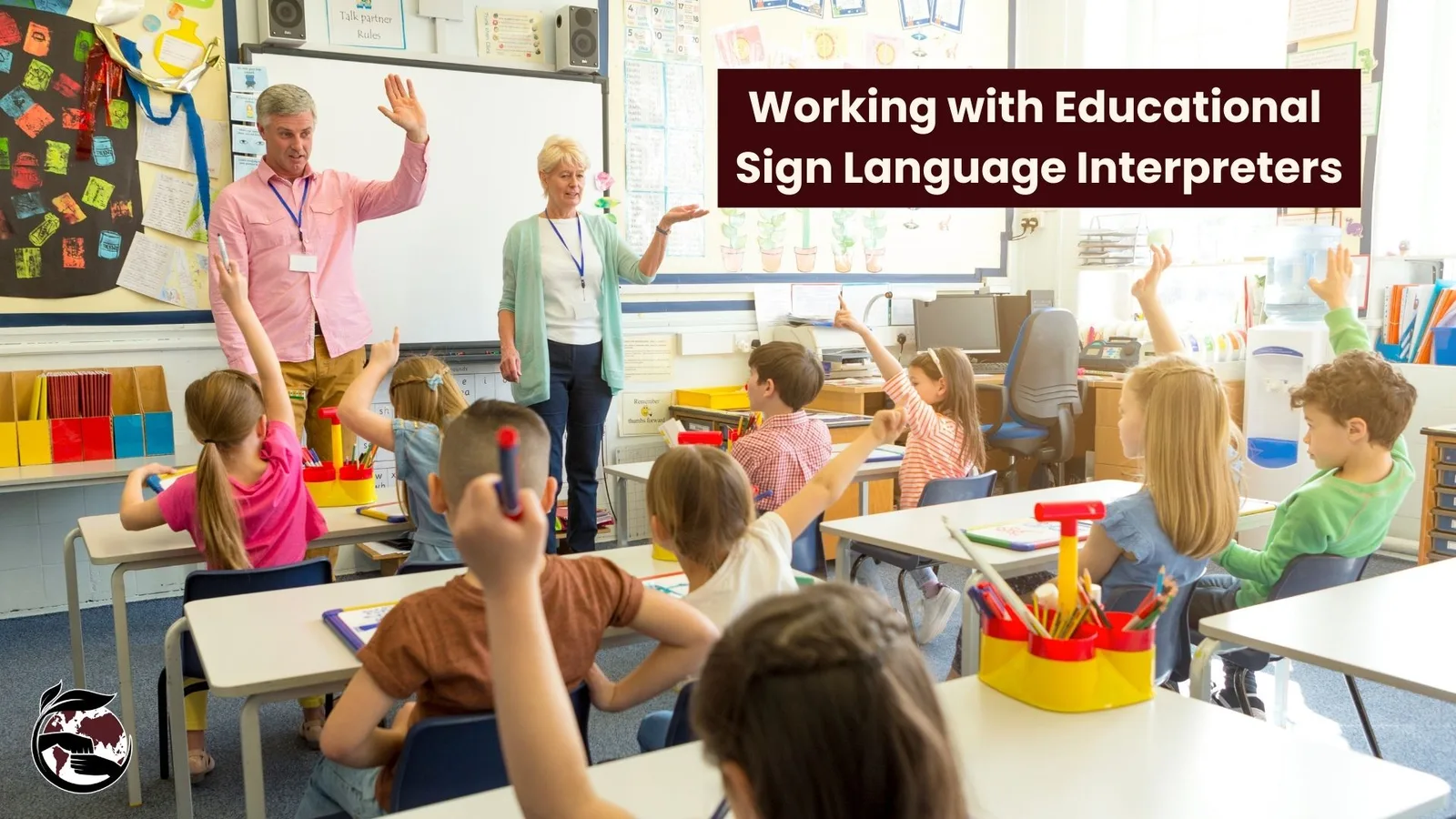
Educational interpreters play an important role in facilitating the academic success of Deaf students within school environments. When teaching in a diverse classroom, interpreters are an essential accommodation for helping Deaf students learn and grow.
Educational interpreters are used in classrooms of all grade levels. The job of this interpreter is to provide access to all communication in the classroom, including discussions amongst students and teachers.
The instructor should teach the class as they normally would while also making sure they always face the class, do not cross in front of the interpreter, that they speak at a reasonable pace, and have shared all relevant materials with the interpreter in advance.
An Individual Education Plan (IEP) is a legal document provided under Federal law that is intended for children with disabilities attending public schools. It is developed with the child’s parents, teachers, and members of the school system.
Overall, interpreting services are an essential part of any Individual Education Plan (IEP), providing a quality education for Deaf students. This critical accommodation allows Deaf students to participate fully in the classroom and to learn and grow alongside their hearing peers.
The provider will also ensure access to all media information presented in the classroom, such as powerpoints, lectures, presentations, videos, study materials and activities. In addition, providing the interpreter with access to the student’s IEP allows the interpreter to be more effective resulting in a better learning experience and outcome for the Deaf student.
The interpreter should understand the primary challenges identified in the Deaf student’s IEP in order to adjust their services to appropriately accommodate the student’s learning and communication style.
Interpreters use their knowledge of both American Sign Language (ASL) and English to translate what is being said in English into ASL for the Deaf students in their classroom. They also translate what the Deaf students are saying from ASL into English for other hearing students and teachers. This allows all students to participate in the classroom discussions and activities, regardless of their preferred language or cultural background.
It is possible for one sign language interpreter to cater to the needs of two Deaf students in the same classroom if the students share the same class schedule. However, this interpreter arrangement requires the interpreter to be very skilled and experienced in the educational setting. The interpreter will need to be prepared to move where needed in order to seamlessly interpret for the two students.
If the two deaf students are in different classrooms for any part of their school schedule, then it will be necessary to have two interpreters. This arrangement will allow each interpreter to focus on one student at a time, providing a higher quality and more individualized interpreting experience. It will also allow the interpreters to take breaks when needed, which in turn should facilitate improved accuracy and clarity in the interpreting services.
Yes, the sign language interpreters will spend the entire school day with the student if the student has the need for an interpreter during the entire day. The Individuals with Disabilities Education Act (IDEA) requires that schools provide students with disabilities with the accommodations they need for an effective education. This includes providing qualified interpreters for students who are Deaf or hard-of-hearing.
The IDEA also requires that schools consult with parents and students to determine the needs of Deaf students. If a student’s IEP states that they need an interpreter all day to support their communication and understanding, then the school is legally required to provide interpreters for the full duration of the school day.
Deafness exists on a spectrum, where the requirements of each individual Deaf student vary. Some Deaf students may only need an interpreter for certain classes or activities, while others may need an interpreter for the entire day. Additionally, while some Deaf students opt for assistive technology like hearing aids and cochlear implants, others do not utilize such aids.
Collaborating with sign language interpreters, educational staff, and the student is crucial to determine specific needs and appropriate accessibility accommodations. Additional accommodations for Deaf students may include note-takers and extended test-taking time.
If possible, it is best to provide the interpreter with the student’s IEP and study materials at least two weeks before the class begins. This will give the interpreter sufficient time to review the materials and develop a plan for how they will approach interpreting for the student.
If you are unable to provide the interpreter with the student’s IEP and study materials two weeks before the class begins, you should still provide them with the information as soon as possible.
At Inclusive Communication Services, we want to ensure every Deaf student has the resources and support they need to succeed academically and beyond. Contact us for guidance and support to facilitate the inclusion of educational interpreters in the classroom.

Kaycee Summers
Trouble with the form? Open it in a new tab.
Tell us what you’re planning and a coordinator will come back with options and pricing.
A practical comparison for event planners, coordinators, and access leads weighing Video Remote Interpreting against sending an interpreter in person.
July 10, 2026 · 3 min read
I went to a popular historical museum in North Carolina with my mother to celebrate our spring birthdays. We joined the line, sent our backpacks through security, and walked over to pick up the audio…
May 8, 2026 · 6 min read
Four years after The Expanded Language Access Law was adopted in New York, state representatives are now opening discussions around the official inclusion of American Sign Language (ASL). This blog lo…
April 18, 2026 · 4 min read