
Accessibility
VRI vs. On-Site Interpreting: How to Choose
A practical comparison for event planners, coordinators, and access leads weighing Video Remote Interpreting against sending an interpreter in person.
July 10, 2026 · 3 min read
By Rebecca Hull · · 2 min read
Last updated
Editor’s Note (Updated Sept 22, 2025): Since this article was published, Charlie Kirk was killed in a recent shooting incident that has been widely covered in the news. This blog remains focused on the themes originally discussed.
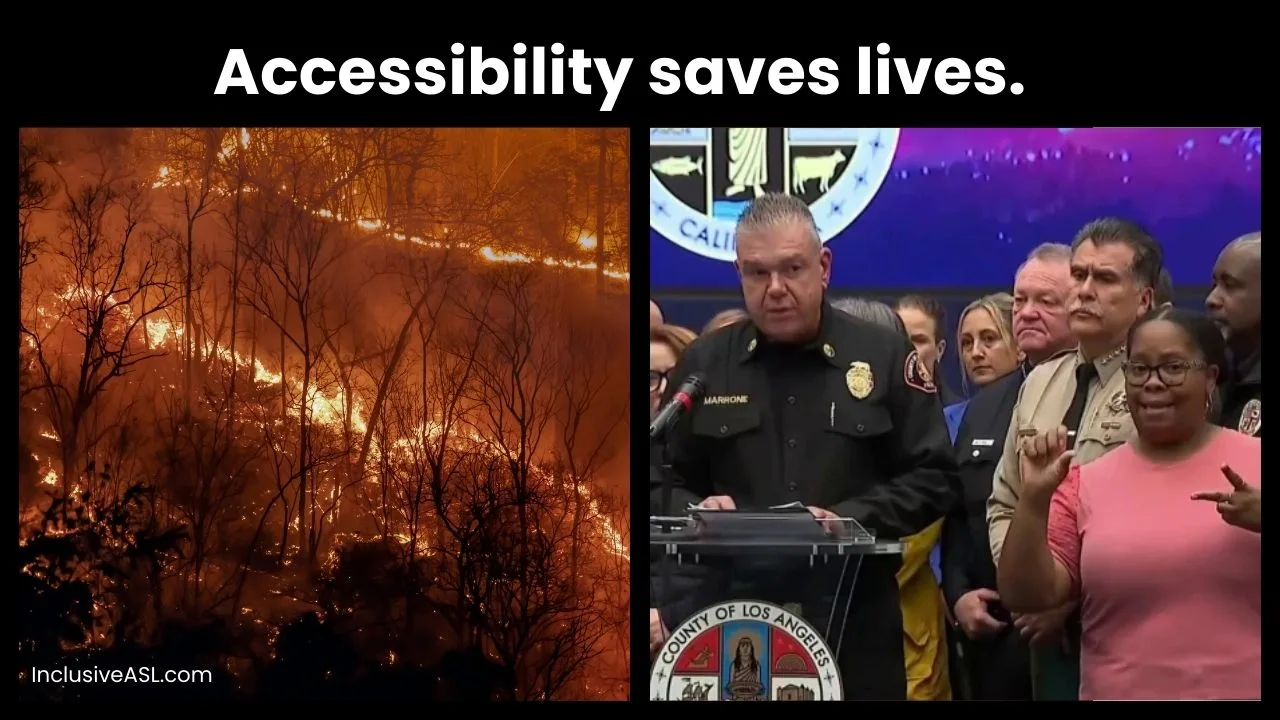
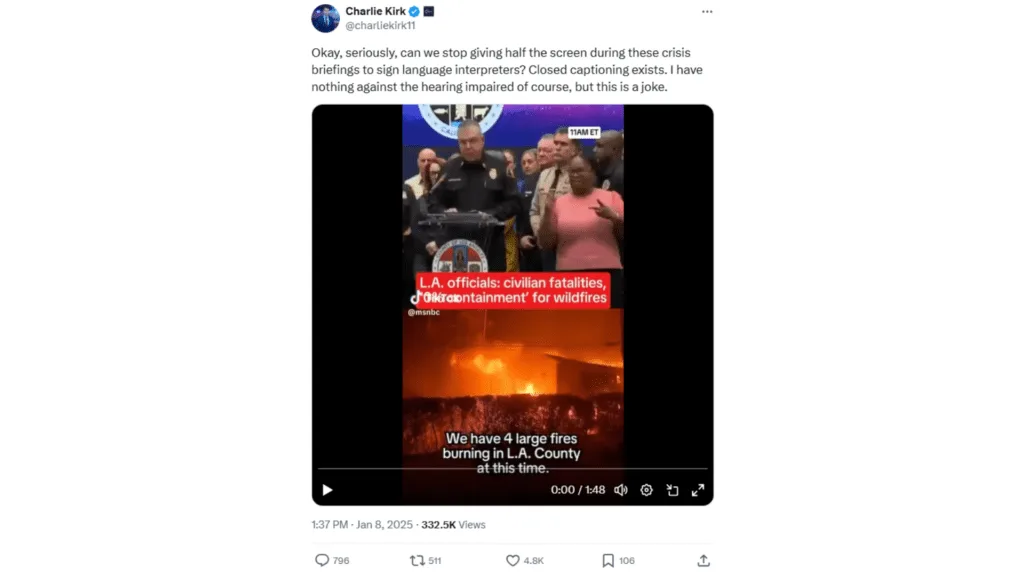
It’s not optional—accessibility saves lives. Your recent comments about sign language interpreters being a “distraction” during emergency broadcasts misses the mark.
Sign language interpreters in emergency broadcasts are not there for decoration or as an afterthought. They are lifelines. During emergencies—wildfires, hurricanes, terrorist attacks—clear and immediate communication can mean the difference between life and death. Deaf and hard-of-hearing individuals are worthy of access to accurate and timely information.
Interpreters deliver more than words—they convey urgency, tone, and context. For many Deaf individuals, American Sign Language (ASL) is their first language, not English. Captions, while helpful, assume English fluency and often miss the urgency of a situation the way a skilled interpreter can through their expressions and signing.
Closed captioning is an excellent tool, but it is not flawless. Captioning can be prone to errors—missing words, incorrect punctuation, or even mistranscriptions—that can significantly alter the meaning of critical information. For example, the absence of a comma in “Let’s eat, Grandma” changes the sentence’s meaning entirely. In emergency situations, such errors can lead to confusion or, worse, endanger lives.
Your comments highlight a privilege: hearing individuals often take access to information for granted. Suggesting we “go back to basics” by removing interpreters isn’t simplifying—it’s excluding.
Accessibility isn’t extra—it’s essential. Lives depend on it. To everyone impacted by the California wildfires, we send our deepest support. Stay safe and stay informed.
From the January 8, 2025, edition of The Charlie Kirk Show, streamed on Rumble:
“CHARLIE KIRK: I'm gonna say this just off the cuff before I introduce our guest. Can we please just go away with half the screen during these emergency briefings to the sign language interpreters? I have nothing against, obviously, people that cannot hear, but there's closed captioning. I mean, this is just over the top. We can't do this. We gotta get back to how it used to be. It's just, oh, it's just too much. It's a distraction is what it is. The reason is they do these emergency briefings for fires or terrorist attacks, and you're looking at this and you're not listening. I don't like it. So we got — we just gotta — closed captioning's perfectly fine. I think we have to — we gotta get back to basics here.”
View Charlie Kirk's X post here.

Rebecca Hull
Trouble with the form? Open it in a new tab.
Tell us what you’re planning and a coordinator will come back with options and pricing.
A practical comparison for event planners, coordinators, and access leads weighing Video Remote Interpreting against sending an interpreter in person.
July 10, 2026 · 3 min read
I went to a popular historical museum in North Carolina with my mother to celebrate our spring birthdays. We joined the line, sent our backpacks through security, and walked over to pick up the audio…
May 8, 2026 · 6 min read
Four years after The Expanded Language Access Law was adopted in New York, state representatives are now opening discussions around the official inclusion of American Sign Language (ASL). This blog lo…
April 18, 2026 · 4 min read